The Stories of Village Heroes

by Cindy Goldstein
The Mamaroneck Observer continues to publish profiles of some of our Village heroes represented on the street banners recently installed. Their stories are both interesting and inspiring.
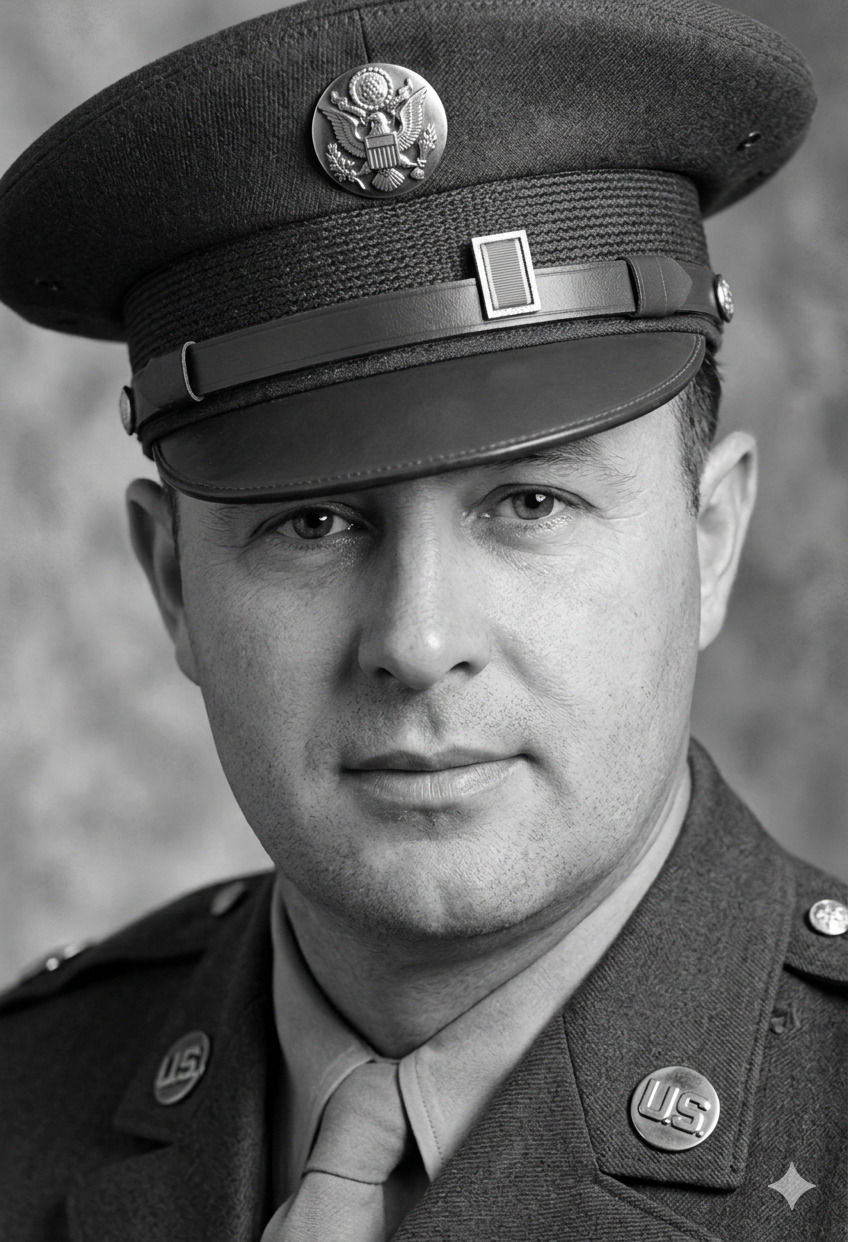
Edward L. Retz, U.S. Army Technician 5th Class
Edward Leander Retz was the son of immigrants and was born in Connecticut in 1908. As a young adult, he moved to Mamaroneck and boarded with the Miller family, who had a daughter, Olga, who was the same age. Olga and Edward married in 1930. Before joining the US Army in 1943 at the age of 35, Retz had served in the National Guard for three years, was a member of the Rescue Squad of the Town Civilian Protection Forces and was a member of St. John’s Lutheran Church Council. He lived on Sand Street.
On D-Day, he was in Battery B of the 397th Antiaircraft Artillery Automatic Weapons Battalion and his landing craft was scheduled to land early on June 6 to protect the troops following behind. The landing craft was hit directly by enemy fire and suffered horrific casualties before landing on Omaha Beach.
His wife had originally been notified that he had been “slightly wounded,” but a later telegram informed her that he had been killed.
Retz is honored at the National D-Day museum in Bedford, VA and a stained glass window is dedicated to him in St. John’s Lutheran church in Mamaroneck. He was the first member of the congregation to give his life in World War II. Retz is buried at the Greenwood Union Cemetery in Rye.

John F. Schroeder 2nd Lieutenant US Army
An industrious young man, one long-time Mamaroneck resident remembers that when in high school, John reliably delivered fresh eggs to her family every week. He was a good student at Mamaroneck High School and graduated in 1935. In 1940, he received a degree in geology from New York University and was a member of the R.O.T.C. He was called to active duty in 1942 and married Marguerite A. Sterling from Paterson, New Jersey, on January 22, 1944, at St. Thomas Episcopal Church. John was active in Boy Scouting and was Scout Leader of Troop 1. He was also president of the Young People’s Fellowship of St. Thomas, where he taught Sunday School and acted as a crucifer on various occasions.
He was awarded the Combat Infantryman Badge for outstanding performance of duty and exemplary conduct in action against the enemy in the Guam operation and the Expert Infantryman’s badge while stationed in Hawaii. He was posthumously awarded the Purple Heart and the Silver Star medals. He was approximately 26 years old and lived on Delancey Ave.
A letter was sent by his commanding officer, Capt. Herbert E. Ward, and reads in part as follows:
“I have known John for over two years, and I don’t think I have ever seen an officer who was held in such high esteem by the men of his unit. As an officer and a gentleman, he was ‘tops,' and a natural leader of men. During two campaigns, he successfully led a platoon until he was killed by a Japanese rifle on Dec. 20, 1944, during the attack on the Tagbong River, Leyte, P. I. His devotion to duty and the heroism displayed by him in action against the enemy was an inspiration to all members of his platoon."
The attack on the Tagbong River was part of the successful campaign to seize the Ormoc Valley.
In 1947, John’s mother sent a thank-you letter to Adolph and Helen Kemper, who created the Kemper Memorial Park. In it, she said the Memorial Park “was a lasting tribute to our loved ones and should help to keep their memories fresh for years to come.”

William Theile Army Air Corps Ordnance Private First Class US Army
Born on September 16, 1920, in Chicago, William moved to New York as a small child. His father was a German immigrant and a financier, and his socialite mother was related to Daniel Webster. His family was extremely wealthy and resided on a four-acre estate on Shadow Island, off Taylor’s Lane in Mamaroneck.
In 1936, when he was 15, William made national news when, as an heir to a fortune, he ran away from home and hitchhiked to Chicago, where he got a job selling magazine subscriptions. A nationwide search was conducted before he was found in a cheap hotel. He was reluctant to return home but, when told his mother was prostrate with concern for him, tears streamed down his face and he returned. According to the Chicago Daily Times, William stated, “I was fed up on society life and decided to make my own way in the world…Now I’ll have to go back to breakfasts in bed and chauffeur-driven automobiles.” William had been a student at Rye Country Day at the time of his disappearance and, although a stellar athlete, he was not a stellar scholar. He later attended the New York Military Academy and the Wharton School of Finance and Commerce at the University of Pennsylvania.
Ironically, in 1908, Theile’s father, Wilhelm Theile, had emigrated from Germany at the age of 15 to the United States on his own. Wilhelm’s stepfather had paid his passage, and he had $20 in his pocket. His destination was his aunt’s apartment on 42nd Street in Manhattan.
William joined the U. S. Army Air Corps in 1942 and was killed in a jeep accident on April 8, 1945, in Italy, having been overseas for a year serving with the Army Air Corps Ordnance.
Editor’s Note: The Mamaroneck Observer gratefully acknowledges the assistance of Jan Northrup, Pat Allen and Amy Siskind for this article.


